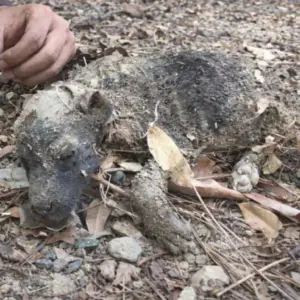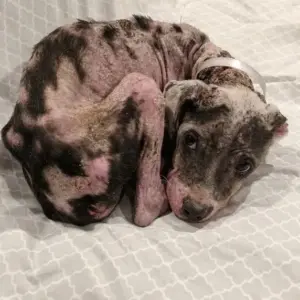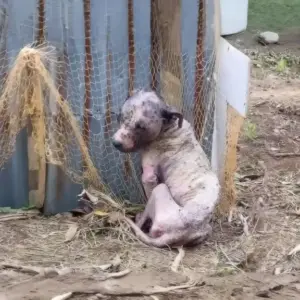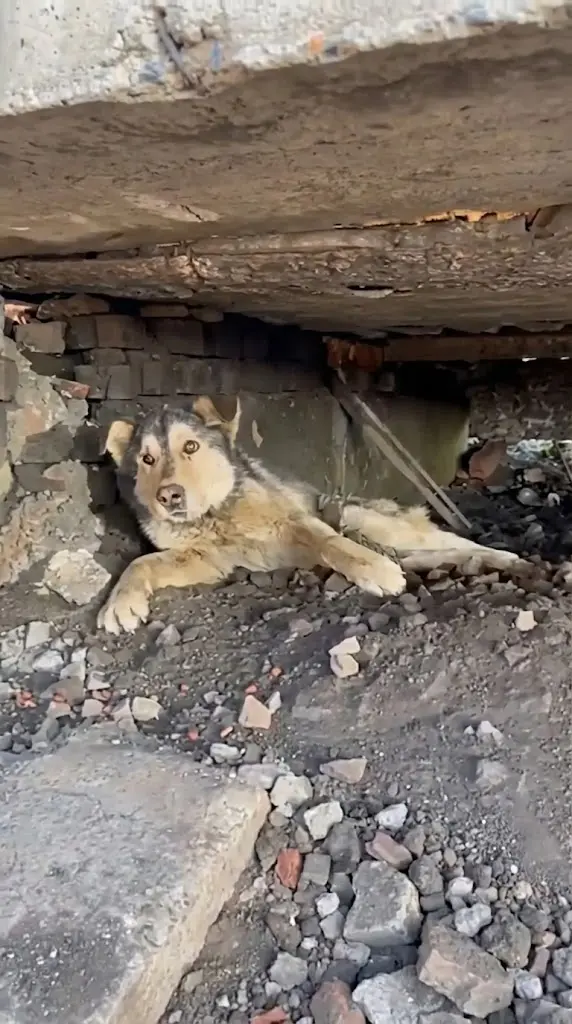
Railway stations pulse with constant motion, filled with arrivals and departures that never cease. Yet, not far from such a bustling hub, under a cold, shadowed bridge, movement had frozen completely. Hidden away in this forgotten place was a Husky whose life had come to an agonizing halt.
A railway worker spotted him first — a fragile figure barely clinging to life. The dog lay quietly beneath the bridge, crushed and broken, likely trapped there for days without anyone noticing as the busy world rushed by overhead. That single phone call to a rescue team changed everything and marked the start of an incredible journey of hope and resilience.
Rescue and Harrowing Diagnosis
The rescue team drove over a hundred kilometers without hesitation, their minds focused solely on reaching the injured dog in time. When they arrived, a profound silence surrounded them. There, beneath the bridge, lay the Husky with his body shattered by the impact of a passing train. His legs were crushed, his strength nearly drained. Yet, when the rescuers approached, he showed no aggression or fear. Instead, he leaned gently into their presence, a fragile gesture of trust and relief.
At the veterinary clinic, the grim reality became even clearer. The dog, soon named Vova, was paralyzed from the waist down due to severe spinal damage. On top of this, an ultrasound showed a dangerous intestinal blockage, a condition that often proves fatal. Against the odds and the bleak prognosis, the team chose to fight for him, refusing to give up on Vova’s life.
The first two days were excruciating—Vova endured vomiting, trembling, and weakness. His survival was uncertain, and the team faced the brutal truth that medicine alone might not suffice. Despite this, they held onto hope and stayed by his side.
Slow but Steady Progress
Recovery came with a timid but steady pace. On the seventh day, a significant milestone arrived when Vova finally started accepting food again. Though small, it signified a vital turn. By the twelfth day, it was evident that his back legs had lost all sensation. Still, physical therapy brought improvements; by day thirty-five, Vova’s front body had grown noticeably stronger, and his personality began to shine through the pain. He found happiness in treats, warmth from gentle touch, and calm in affectionate cuddles.
Vova developed a special gentleness around children, wagging his tail as if to remind everyone that kindness can endure even the deepest suffering. He transitioned from being solely a survivor to becoming a beloved member of a caring family—one who had endured immense hardship but remained tender and open-hearted.
Embracing New Freedom on Wheels
By the sixtieth day, a quiet transformation began. Vova, unwilling to remain still, began using his front legs to drag himself forward with determination. The indomitable spirit of a Husky pushed him to explore, move, and live fully despite his limitations.
To support him, the team presented a custom-built wheelchair designed specifically for Vova. Initially foreign and strange, the wheelchair soon became a symbol of newfound independence. By day one hundred, Vova moved confidently, no longer seeing the wheels as confinement but as a gateway to freedom. He ran again, the wind flowing through his fur and purpose shining brightly in his eyes.
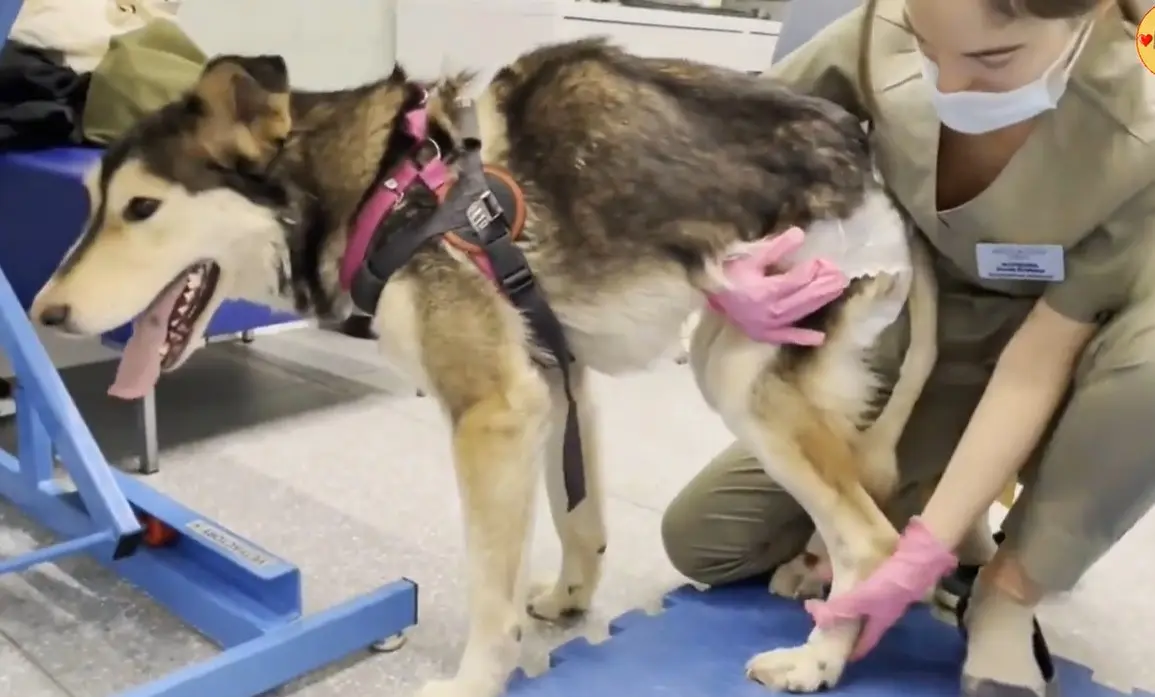
Day 145: Celebrating a New Beginning
More than one hundred forty-five days have passed since Vova was discovered beneath that cold bridge. His journey extends far beyond the physical distance covered; he has traveled from despair to true joy, from silence to vibrant life. Although his spine may never fully heal, his spirit remains unbroken.
Now, Vova spends his days basking in the sunlight and enjoying treats, reminding all who meet him of a powerful and enduring truth: hope flourishes wherever compassion is real, pain does not extinguish kindness, and no life is ever disposable—not even one once forgotten and left behind.
Because people cared deeply, because they chose to act instead of ignore, Vova is alive today. And that is the greatest gift of all.