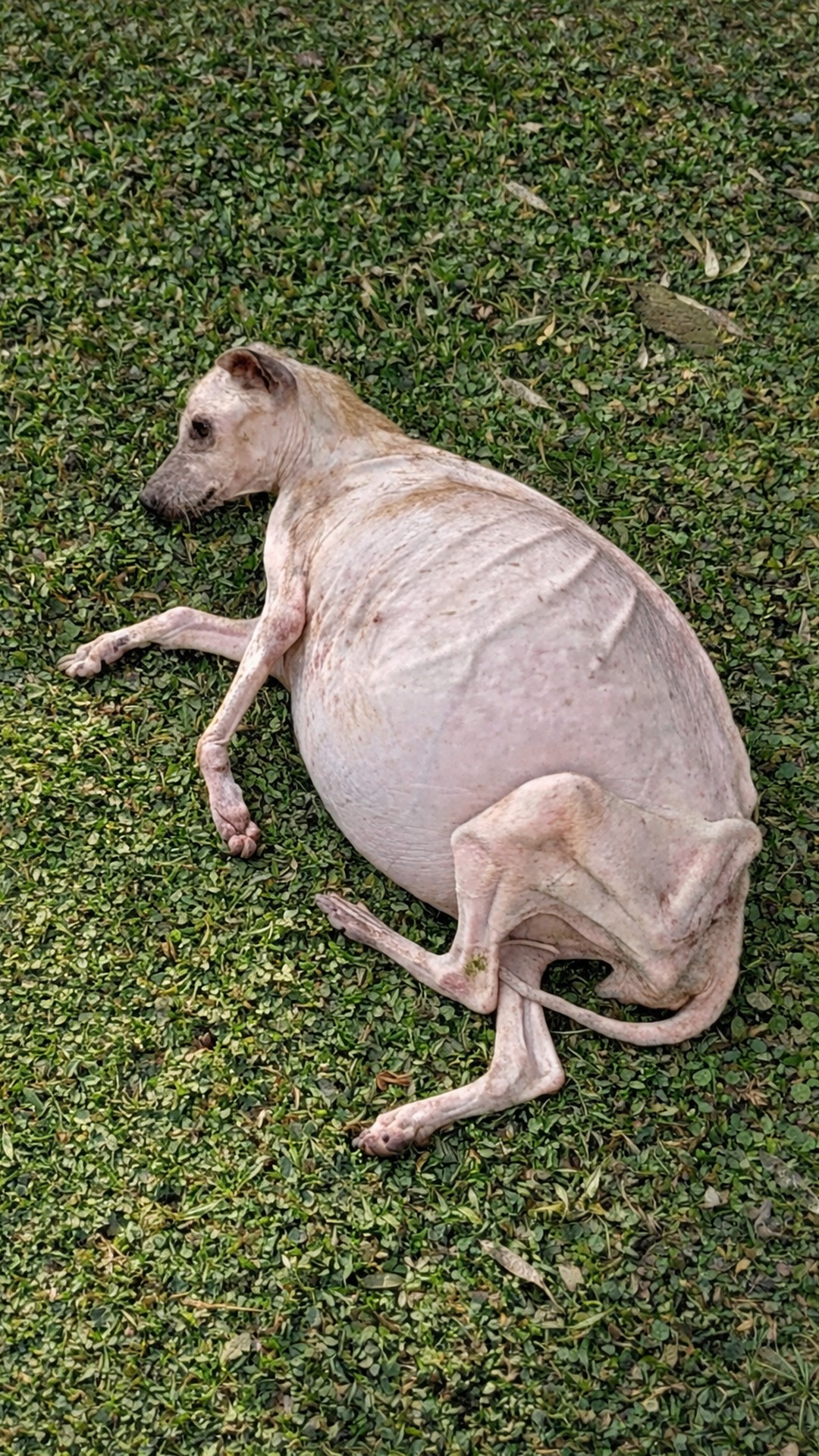
One morning, a frail dog appeared at the door, silently standing as if she had already decided this was her last chance. This uninvited guest had no collar, no microchip, and no one searching for her. Her body told a distressing story: severely malnourished, with visible ribs and sharply outlined hips beneath thinning skin. Yet, a stark contrast to her fragile form was her dramatically swollen abdomen, stretched tight and unnatural. Each breath seemed like a struggle, and every careful step was calculated.
Despite her dire condition, she managed to wag her tail—not with wild excitement but enough to convey, “I’m here.” We named her Miracle.
A Body in Crisis
At the veterinary clinic, the mood shifted quickly from concern to urgency. Blood tests, imaging scans, and thorough examinations revealed more than anyone had hoped. Her abdomen continued to enlarge, fluid accumulating alarmingly fast. Her coat thinned until it fell out entirely, and her energy waned. Miracle was too weak to return home, necessitating hospitalization, intravenous fluids, and continuous monitoring. Stabilizing her breathing and easing the pressure in her abdomen became the priority.
Then came the diagnosis: advanced liver cancer. The prognosis was grim, and survival rates were discouragingly low. Some suggested that perhaps letting her go would be the most compassionate choice. Yet, Miracle showed no signs of surrender. She continued eating small portions, drinking water, lifting her head when someone entered the room, and following voices with her eyes. Her tail still wagged—she wasn’t done fighting.
Choosing Hope Over Assumption
Cancer in dogs is complex, especially liver cancer, which can progress rapidly and unpredictably. Treatment decisions must weigh overall health, quality of life, and response to care. Miracle began receiving a comprehensive medical regimen that included fluid management, nutritional therapy, liver-supportive medications, and vigilant veterinary supervision. The focus was on improving her quality of life, not just prolonging it.
Progress was not instantaneous. There were setbacks—days of decreased appetite and moments of fatigue. However, subtle changes began to emerge. Her breathing steadied, her eyes brightened, and she started greeting the veterinary staff more enthusiastically. Recovery revealed itself in small ways: a stronger stance, a longer tail wag, and an inquisitive glance toward new sounds. Miracle began to smile more often.
A Gradual Return to Strength
As the weeks passed, her body started responding to treatment in ways that surprised everyone. The fluid buildup slowed, her abdomen reduced in size, and follow-up imaging revealed encouraging signs. Bloodwork began stabilizing, and soon, her fur began to regrow—first as soft patches, then as thicker, fuller coverage. Her once-dull coat regained its shine. Her legs, previously shaky, grew stronger with every short walk.
Miracle transitioned from being a frail dog who arrived barely able to breathe to standing with quiet confidence. Hope no longer felt fragile; it began to feel real.
Defying Expectations
In veterinary medicine, probability often dictates outcomes, but some individual cases defy expectations. Follow-up tests confirmed a remarkable turnaround: Miracle’s liver showed no active cancer progression, and her body had stabilized completely. The veterinary team reviewed the results multiple times; it felt surreal, but the evidence was undeniable. She was healthy—not merely improved or temporarily stable, but genuinely healthy.
Miracle’s case is an exception, yet it serves as a powerful reminder: prognosis is not destiny. With early intervention, dedicated care, and careful monitoring, some animals can overcome even the gravest diagnoses. Miracle fought quietly through procedures, medication schedules, dietary adjustments, and frequent check-ups. She never resisted care or withdrew. Her trust in those caring for her played a crucial role in her recovery.
From Patient to Family
Today, Miracle no longer sleeps in a clinic kennel; she sleeps in a loving home. She runs freely, eats eagerly, and greets mornings with enthusiasm instead of exhaustion. Her coat is now thick and soft, and her eyes are clear and bright. She has transcended the label of a patient; she is now family.
Her journey not only restored her health but also transformed the lives of those who cared for her. Witnessing her resilience reshaped their perspectives on limits and assumptions, proving that compassion combined with expertise can yield extraordinary outcomes.
What Miracle’s Story Teaches Us
This remarkable recovery teaches several valuable lessons. First, early veterinary intervention is crucial. If you notice unusual swelling, weight loss, breathing difficulties, or changes in appetite in your pet, seek professional evaluation immediately; many conditions respond better to prompt care. Second, nutrition and supportive therapy play a pivotal role in recovery, with tailored medical plans designed by qualified veterinarians significantly improving outcomes even in complex cases.
VIDEO: Watch Miracle the Dog's Inspiring Journey to Recovery from Cancer
Third, the emotional environment is equally important. Animals are sensitive to their surroundings. Calm handling, consistent routines, and steady reassurance can diminish stress and support healing. Finally, hope deserves a seat at the table—not blind optimism, but informed hope grounded in action, care, and commitment.
Miracle arrived at our door barely able to stand, facing an uncertain future. Today, she walks freely, rests peacefully, and trusts deeply. Her name, once chosen gently, now reflects the truth of her existence. She is a miracle—not simply because she survived alone, but because she was given a chance. Sometimes, that chance is all it takes.