On a seemingly ordinary stroll through familiar streets, a man’s dog suddenly stopped and pulled sharply on its leash, refusing to move forward. This was not a typical distraction or simple curiosity; the dog’s behavior was purposeful, drawing attention to something unusual ahead.
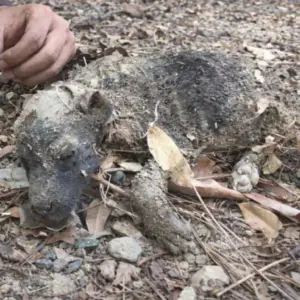
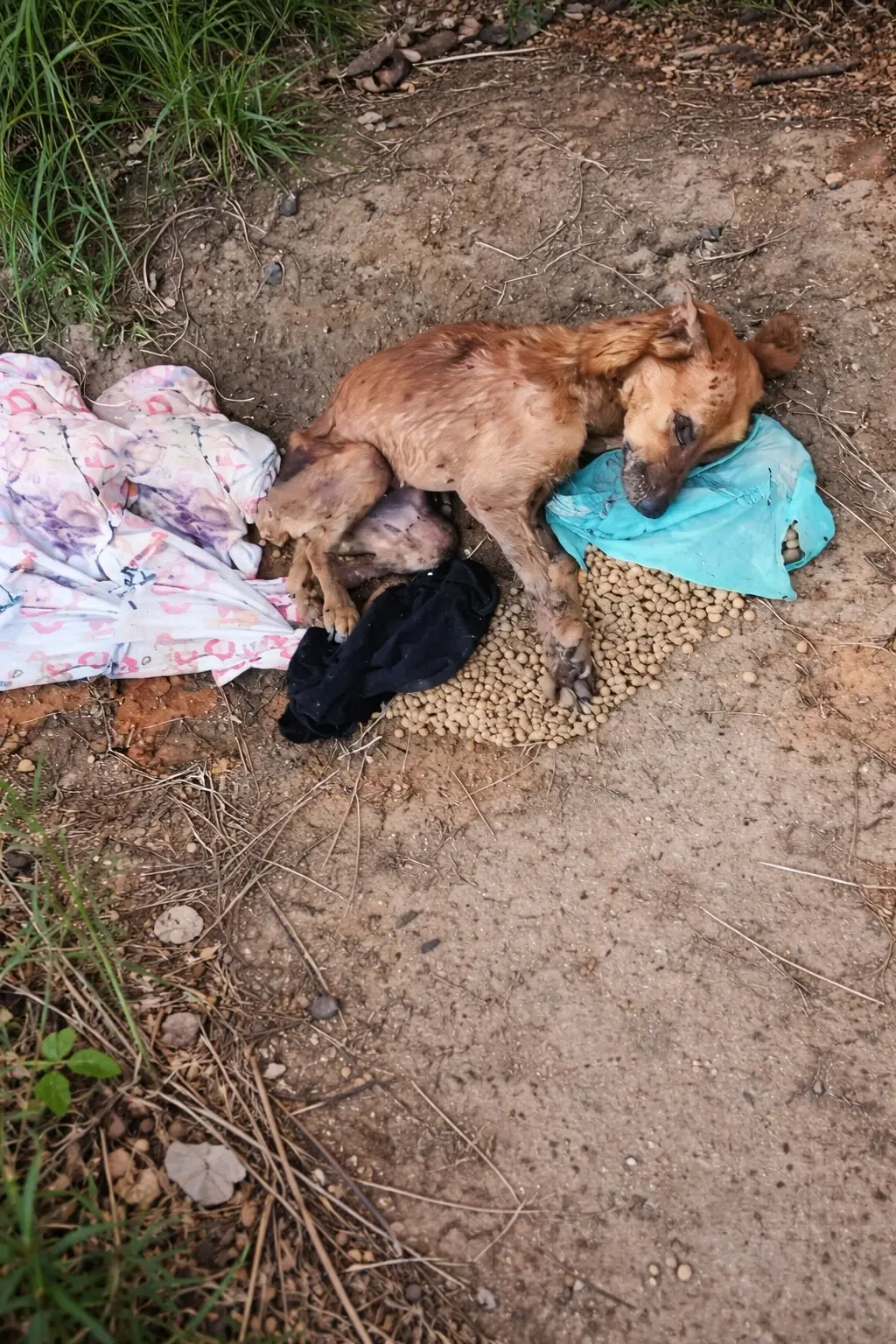
The man followed his dog’s gaze to a hidden corner away from the main path, where he discovered Phoenix, a severely weakened stray dog lying motionless. Phoenix appeared unable to rise, having quietly endured the harsh realities of street life until reaching a critical breaking point. Recognizing the urgent nature of the situation, the man immediately contacted a local rescue group and stayed with Phoenix until help arrived.
The Impact of Life on the Streets
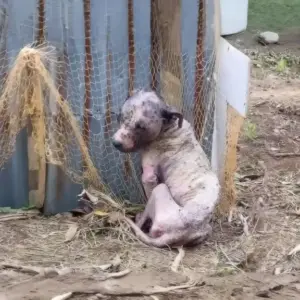
Phoenix had been surviving as many strays do — scavenging scraps, finding safe places to rest, and navigating the dangers and indifference of urban life without anyone to care for her. Her strength declined gradually over time; walk distances shortened, steps slowed, and eventually she collapsed in that out-of-the-way spot, unable to stand again on her own.
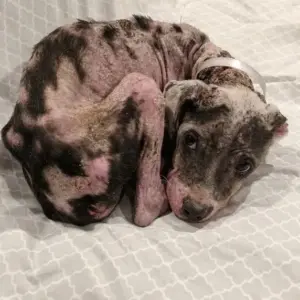
When rescuers arrived, Phoenix’s condition was clearly dire. She was emaciated, too weak to eat or drink by herself, trembling, and barely able to lift her head. They wrapped her carefully in blankets and transported her to a veterinary clinic for further assessment.
Medical Findings Reveal Severe Health Challenges
At the clinic, Phoenix’s health issues were thoroughly examined. The team diagnosed severe malnutrition and significant anemia—clear signs of prolonged neglect and hardship. More concerning were two additional findings: a fractured pelvis and a serious infection that had gone untreated for an unknown length of time.
The pelvic fracture explained Phoenix’s increasingly impaired mobility and the inability to rise. This structural injury, combined with malnourishment and infection, created a complex medical situation with an uncertain prognosis. Despite this, the veterinary team committed to beginning treatment immediately.
Video: Dog on Walk Refuses to Leave Injured Stray Phoenix Behind
The collaborative effect of the fractures, malnutrition, and infection told the story of gradual decline and the battle her body was facing to survive.
Slow, Steady Path to Recovery
For Phoenix, recovery was not a swift climb but a gradual journey marked by small victories. Progressing from one day to the next, she showed subtle signs of improvement—eating a bit more, holding her head higher, or quietly enduring situations that once distressed her.
The caregiving team learned to cherish these tiny milestones: a gentle wag of the tail, a relaxed posture under a soothing touch, the first brief moment of standing before sitting back down. As Phoenix’s condition stabilized, physical therapy was introduced to help her fractured pelvis regain function.
The therapy sessions were a test of endurance and patience. Healing such an injury demands careful, incremental progress, and Phoenix consistently showed resilience. She never gave up, continually striving toward the next achievable step despite the difficulties of standing and walking.
Transformation and Farewell
Months later, the veterinary staff witnessed a moving transformation. The dog who had once arrived trembling and barely able to stand was now leaving on her own feet—calm, steady, and curious about the world around her.
Her demeanor reflected safety and comfort rather than mere survival. Staff members found saying goodbye emotionally challenging, recognizing she was no longer defined by her hardships but by the strength she had shown. Phoenix was leaving not as a patient but as a survivor.
A New Beginning in a Loving Home
Following her recovery, Phoenix was adopted into a home where people had made space and love available to her fully. She seemed to understand this new world—soft beds replaced cold pavement, scheduled meals replaced uncertain scraps, and the low-level alertness of a street dog gave way to relaxed, peaceful living.
In her new family, Phoenix played, rested without pain, and allowed physical affection freely. Her confidence grew naturally, nurtured by time and steadiness rather than pressure or expectation.
The Crucial Role of the Dog That Would Not Pass By
Phoenix’s survival hinged on a critical moment triggered by another dog refusing to continue their usual walk. The owner had no specific plan beyond a routine stroll on familiar streets, but his dog’s insistence made the difference. The choice to stop, look closely, and call for help was the turning point in Phoenix’s story.
Today, Phoenix enjoys a safe, warm home, surrounded by people who chose her. All of her recovery and second chance trace back to that simple but powerful leash pull on a typical afternoon—a reminder of how compassion and attention can save lives.