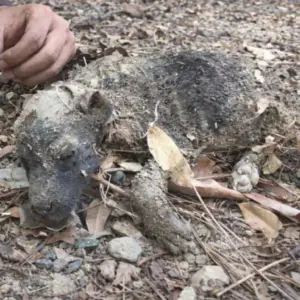
Not every life begins with safety. Some begin with quiet endurance—years of suffering so prolonged they feel like a life sentence. This was the reality for Youngji, a dog who had spent sixteen years tethered outside, enduring the elements and isolation. When rescuers first found her, her frailty was immediately evident: moving had become difficult, sitting painful, and even breathing was slow and measured, as if she was conserving the little comfort her worn body could still grasp.
Yet in a moment that touched those who came to help her, Youngji’s tail gave a small, hesitant wag—not much, but enough to signal that despite everything, she still believed kindness might exist.
Video: Sixteen Years in Silence — Youngji’s Long Wait for Compassionate Care
For sixteen unbroken years, Youngji had been chained outside. Not for a few months, not just a season, but for every day and night of that time. The chain was the one constant in her world, tethering her through scorching summers, bone-chilling winters, soaking rains, and drifting snow. She had no true shelter or freedom, confined to the tiny radius allowed by her metal restraint.
Each morning arrived as the last, and each night disappeared in silence—nothing changed for her. When her owner was questioned by rescuers, the response was chilling in its indifference: she was old and had lived long enough. Age, he implied, invalidated the pain and neglect she suffered. But Youngji was not simply an old dog to be discarded; she was a soul longing for the dignity and comfort owed to all living creatures.
The rescue team prepared for resistance—fear, growls, perhaps aggression born of long neglect. Instead, they were met with calm. Youngji did not pull away or bark; she looked at them with steady, gentle eyes, as if she sensed this moment would change everything. When her tail wagged again, slow and deliberate, it offered a silent welcome. After lengthy discussion, her owner relented and surrendered her. Thus, sixteen years of confinement quietly ended.
At the veterinary clinic, the consequences of years outdoors and neglect were clear. Youngji’s body was fragile and her strength diminished. Time, exposure, and suffering had taken their toll, and there were no quick fixes or miracles to undo it all. Her recovery would be slow—yet for the first time, it would also be filled with tenderness.
Placed on warm bedding, handled gently, and supported patiently, Youngji began to adjust to a new world. She sighed deeply, the kind of sigh that speaks volumes—not just of exhaustion, but of relief. For the first time in years, she no longer had to brace every moment against discomfort.
One of the most heartbreaking discoveries during her early recovery was that Youngji did not understand softness or comfort. When given a bed, she chose the hard floor. Blankets made her hesitate. Comfort was alien to her—not unwelcome, but unfamiliar after such a long absence. But slowly, she learned. She accepted a warm place to rest, soft food offered kindly, gentle touches on her head that caused no pain.
Her body began to loosen, and as it did, her heart started to trust again.

The caregivers spoke to her with tenderness, calling her sweet girl and brave soul. And her answer remained the same: a quiet, steady wag of her tail.
Youngji’s story soon transcended her own life. As word of her survival spread, many people reflected on the animals around them—dogs who were chained outside, older pets overlooked and forgotten. Some removed chains, others reached out to rescues or offered help. Youngji became a symbol, a catalyst inspiring compassion and a call to action.
Over weeks, the changes in her were gentle but unmistakable. Her breathing grew softer, her eyes calmer. She gradually leaned into familiar hands instead of merely tolerating them. Trust, buried beneath sixteen years of neglect, began to bloom again. Though her future held uncertainties, one fact became indisputable: Youngji would never face life alone again. Every remaining day would be lived with care, kindness, and love.

She would live with warmth, dignity, and respect—elements of life stolen for so long, now restored.
Perhaps this is why Youngji’s story carries such power. When people now see her, they don’t just see the dog who endured sixteen years of bondage. They see a gentle spirit finally granted rest, a life redefined by compassion and not captivity. Youngji serves as an enduring reminder that love and kindness are never too late—no matter how long the suffering. Even after sixteen years of silence and hardship, a single act of kindness can transform everything.