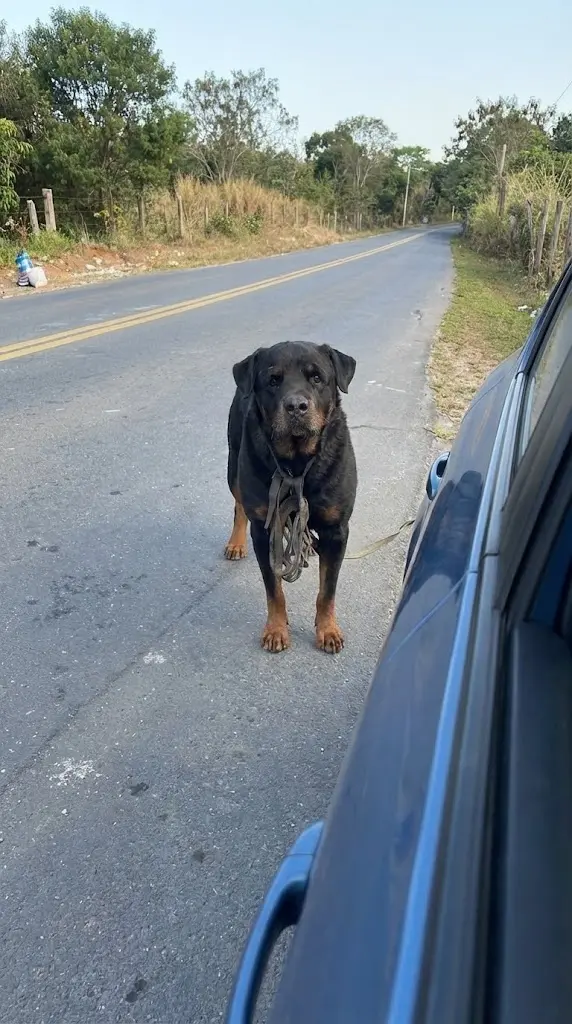
Not every story of rescue begins with chaos or loud cries for help. Sometimes, a quiet stillness along a lonely road reveals a deeper urgency, pulling an attentive passerby to stop and look closer. Late one afternoon, a driver slowed his vehicle on a winding mountain road, not because of an accident or commotion, but because something at the roadside felt profoundly wrong.
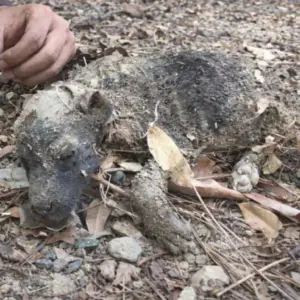
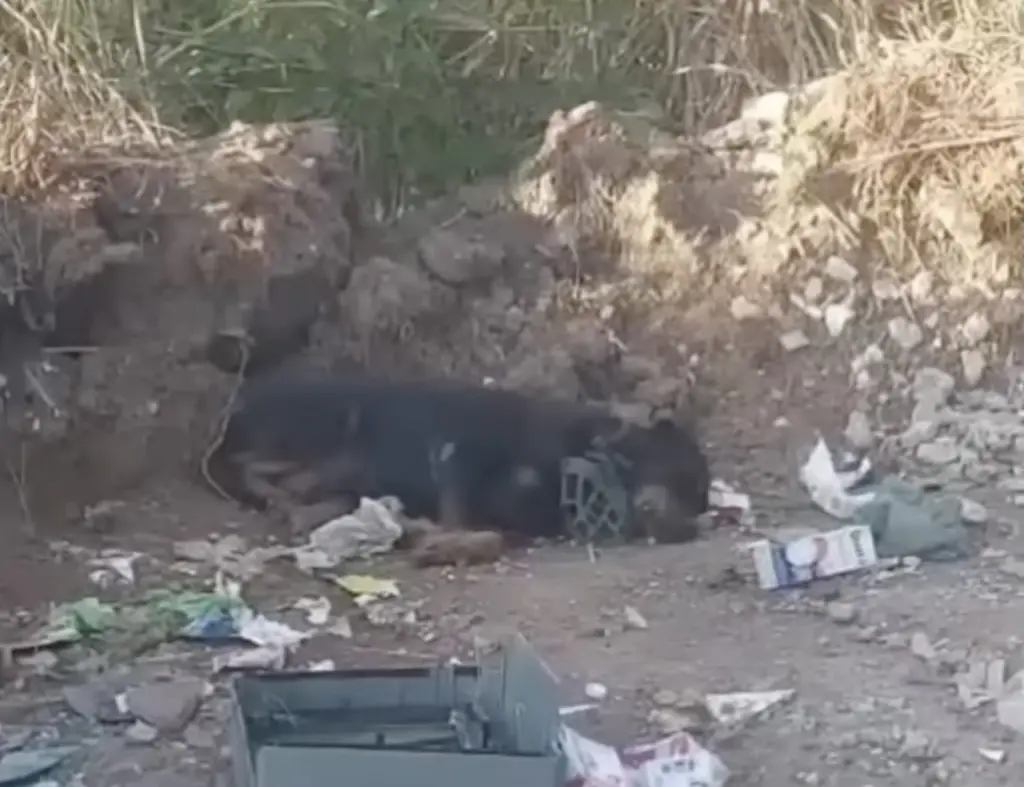
Hidden partially in weeds and debris, a dog lay curled into the ditch, motionless and quiet. Unlike an animal resting or seeking attention, this dog seemed to be trying to disappear entirely.
Approaching carefully, the man noticed the dog slowly lift his swollen, red, and clouded eyes. Though clearly in pain, the dog was alert and watching—waiting in silence, abandoned and neglected.
The Rescue Begins with a Quiet Plea
As the man moved closer, the grim details became clear: a rope was tightly bound around the dog’s neck, and a muzzle was fastened firmly over his mouth. This meant the dog could neither eat nor drink, nor could he cool himself by panting—yet he clung to life.
When the man knelt beside him, the dog’s tail gave a faint, single wag—not out of fear or submission, but more like recognition that someone had finally come close enough to see him.
Finding a can of food in his car, the man offered it instinctively, even knowing the dog could not eat at that moment. The tail moved once more. It was then that the man made a phone call to a trusted rescuer, although there were no easy options for a dog in such a condition.
Video: Silent Approach of an Injured Dog Leads to a Timely Rescue
A Step Toward Hope as Night Falls
By the time the rescuer arrived, the daylight was fading, and fog cast a soft gray over the mountain road. She expected a difficult search or the challenge of coaxing a frightened dog from hiding. Instead, the dog stood slowly and painfully, then walked straight toward her.
Without hesitation, he climbed into the passenger seat as though the decision had already been made long before. This rare moment stayed with the rescuer—Samson, as he would be named, chose to come rather than hide or flee.
With a gentle hand resting on his head, she started the car, and Samson leaned into her lap, closing his eyes to release a breath he seemed to have held for far too long. For the first time, he allowed himself to rest.
Comfort and Care Begin the Healing Journey
Once home, the rescuer carefully removed Samson’s muzzle and the rope around his neck. He remained calm and passive, allowing kindness to reach him. A bowl of water was offered, and he drank deeply and urgently, pausing now and then to breathe before drinking again.
Afterward, curled on a blanket, Samson relaxed fully for the first time in a long while. Observing him, the rescuer realized he was once a pet, not a stray; he responded to basic commands and showed signs of recent grooming. Someone had cared for him before—and also chosen to abandon him.
She named him Samson—not for brute strength, but for his endurance in silence, the quiet power to survive long enough to recognize gentleness when it finally arrived.
The following morning brought a veterinary evaluation. Samson was dehydrated and emotionally spent but showed no irreversible physical damage. What he needed most was not dramatic medical intervention, but time and patience.
Recovery Through Patient Compassion
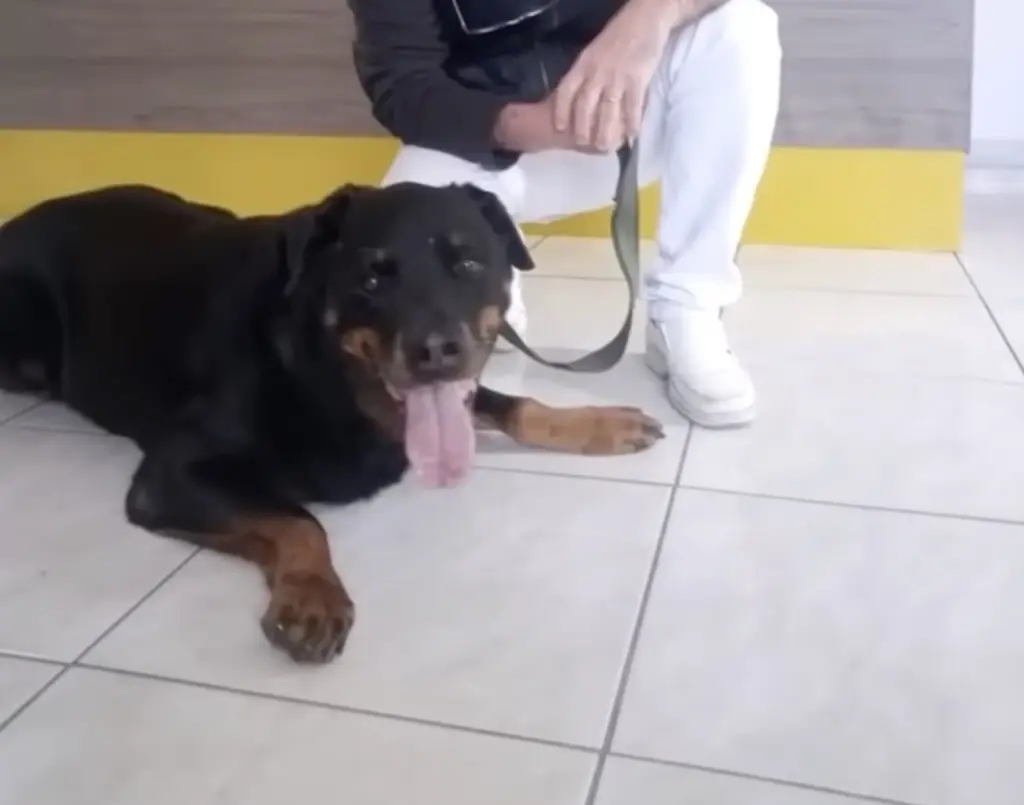
Samson’s recovery was gradual, grounded in the steady rhythm of regular meals, fresh water, warm baths, and a calm routine. During bath time, as dirt washed away, Samson leaned into gentle hands, surrendering in trust rather than fear. His golden-brown coat began to shine again.
His nights became peaceful—no pacing, trembling, or watchfulness—just rest. With time, his tail wagged more often, his posture lifted, and the pain in his eyes softened into gentleness.
He began to explore the yard cautiously, then with growing confidence. He rolled on the grass, chased balls clumsily but joyfully, and barked softly at butterflies, discovering simple happiness anew. His transformation was quiet but profound.
From Abandonment to Trust
Samson’s change was not sudden or flashy, but deeply meaningful. It happened because someone noticed him, made that crucial call, showed up, and stayed. He learned to trust gentle hands and kind voices, and that safety could be lasting.
Weeks after being found tied and muzzled in a ditch, he was playful, steady, and fully present in his life again. When his rescuer entered the room, Samson greeted her with a soft nudge of his nose—no grand display, no words, just quiet gratitude.
The Lingering Message from Samson’s Story
Samson’s story resonates because it is far from unique. Somewhere else, another quiet road may hide another soul unable to call out for help, only hoping someone will notice in the silence. It reminds us that rescue is not always heroic drama; often it begins with slowing down and choosing compassion rather than driving past.
Once muzzled and tied by a roadside, Samson now lives surrounded by warmth, routine, and affection. His gentle choice to trust again leaves behind an important truth: love does not only save lives—sometimes it quietly gives them back, one gentle moment at a time.