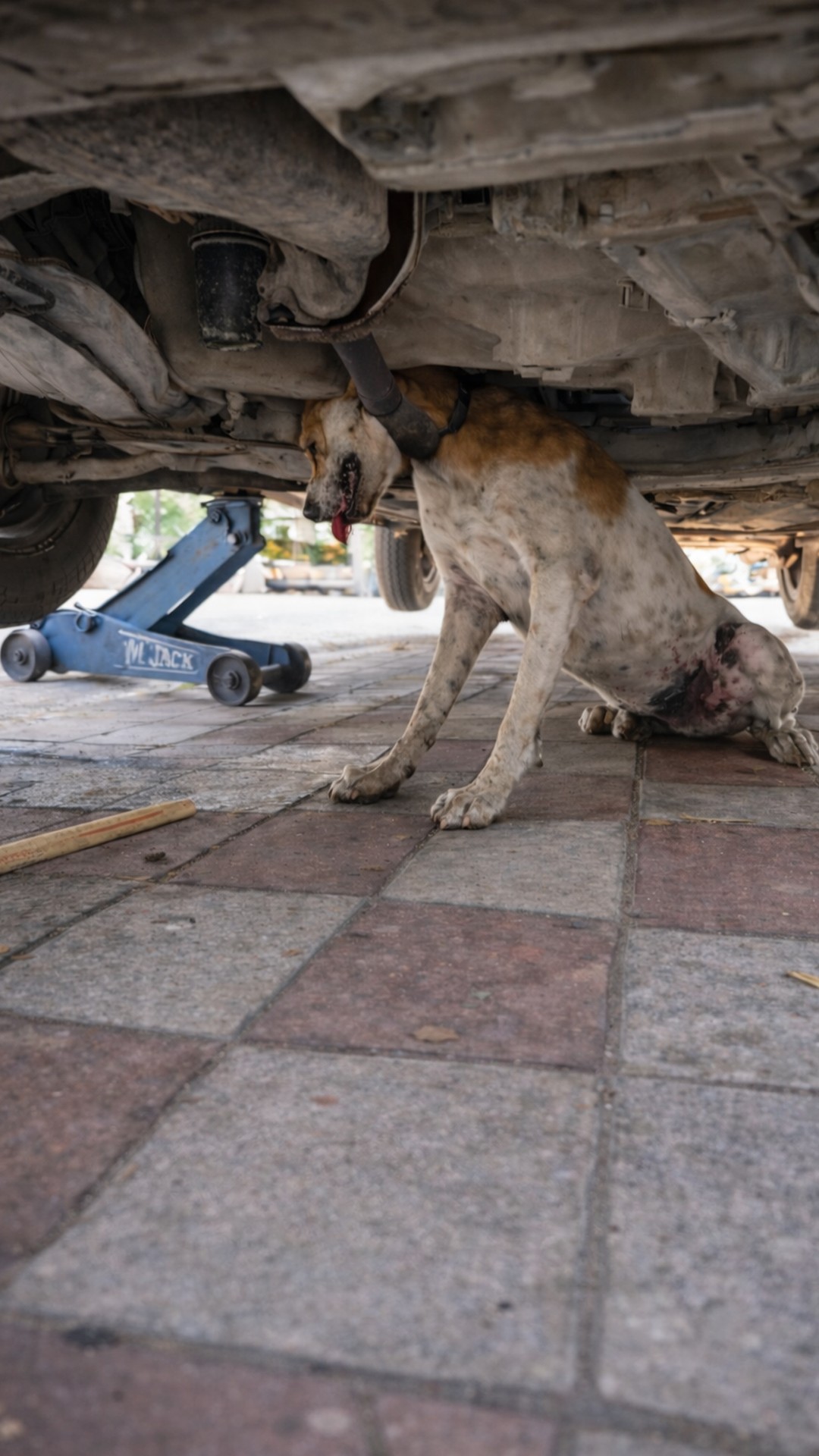
In a split second, everything can change. For one dog, a routine chase turned into a life-threatening emergency when it got its head stuck in a parked car’s exhaust pipe.
The chase began innocently enough, with the dog sprinting down a quiet street, fully focused on a cat. But in an unexpected moment, the dog veered toward a parked car, and its head slipped into the exhaust pipe, becoming trapped.
Initially, the dog struggled, pulling and twisting in an attempt to free itself. But the more it fought, the tighter the exhaust pipe held on. Bystanders quickly recognized the gravity of the situation, knowing that swift action was necessary, but also that panic could worsen the problem.
Instead of rushing to pull the dog free, someone called for help from the Nirbhay Foundation. Their trained rescuers arrived with tools and the experience needed to handle the situation with care.
Upon arrival, the rescuers did not immediately attempt to extract the dog. Instead, they took a moment to observe. The dog was frightened and alert, its body tense. They understood that the chaotic environment needed to shift to one of calm before any progress could be made.
With the car owner’s permission, they focused on detaching the exhaust pipe rather than forcing the dog out of it. Every action was deliberate, and the rescuers worked slowly, ensuring they did not cause the dog further distress. After careful work, the pipe loosened, and the dog was freed.
Once released, the dog stood still for a moment, seemingly processing its newfound freedom. Then, just as quickly as the crisis had begun, the dog shook itself off and dashed away, tail wagging, back to its joyful life.
However, the day held another emergency. Shortly after this rescue, the same team received a call about another dog that had been hit by a car. This situation was markedly different and called for a more serious response.
When the rescuers arrived, they found the injured dog lying still on the ground. Its body was tense, and every tiny movement seemed to require immense effort. Unlike the first rescue, this was not a situation that could be resolved quickly; it demanded careful and thorough medical attention.
A veterinarian began an assessment, focusing particularly on the dog’s spine, which is crucial for movement and recovery. Thankfully, after a careful examination, it was determined that the spine was intact. However, the dog had suffered an injury to one of its legs, requiring extensive treatment and rehabilitation.
The injured dog was transported to a rescue center where the real work of recovery began. This process would take time, and the team understood that healing is not always immediate; it is a gradual journey.
In the initial days, rest was essential, followed by treatment and gentle rehabilitation. Progress was not always visible to the casual observer, but each small improvement was a step toward recovery.
VIDEO: Rescuers Free Dog from Exhaust Pipe and Assist with Injured Canine
As days passed, the dog began to show signs of improvement. It tentatively started putting weight on its injured leg, first a little, then gradually more. Each movement was a victory, and with every small triumph, the dog’s confidence grew. The energy that had been disrupted by the accident slowly returned, and the dog’s body began to relax.
These two rescues presented stark contrasts. One was resolved quickly, marked by a sudden moment of tension and immediate action, while the other required a nuanced approach over time. Yet, they both share a common lesson: how we respond in an emergency makes a difference.
In the case of the trapped dog, patience and careful decision-making were key to a successful outcome. For the injured dog, ongoing, steady care ensured a path to recovery. Both situations remind us to remain calm and think clearly when faced with unexpected events.
Ultimately, saving a life often looks less like a dramatic rescue and more like a series of thoughtful, deliberate actions. It involves paying attention and making decisions that prioritize the well-being of the animal in need.
The lessons from these rescues are powerful reminders that in the face of emergencies, composure and careful planning can lead to positive outcomes.