The chill that winter morning cut deep—it was the kind of cold that numbs skin and makes every breath feel like a struggle. The neighborhood was engulfed in silence, the air heavy and motionless. Suddenly, a faint sound cracked the stillness—a soft, trembling whimper barely strong enough to be heard.
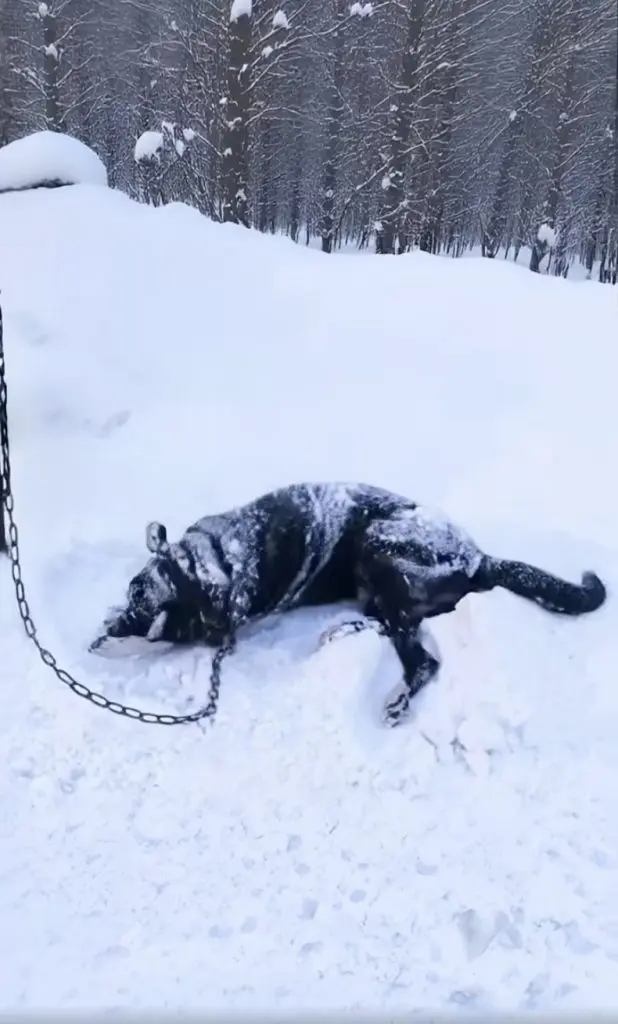
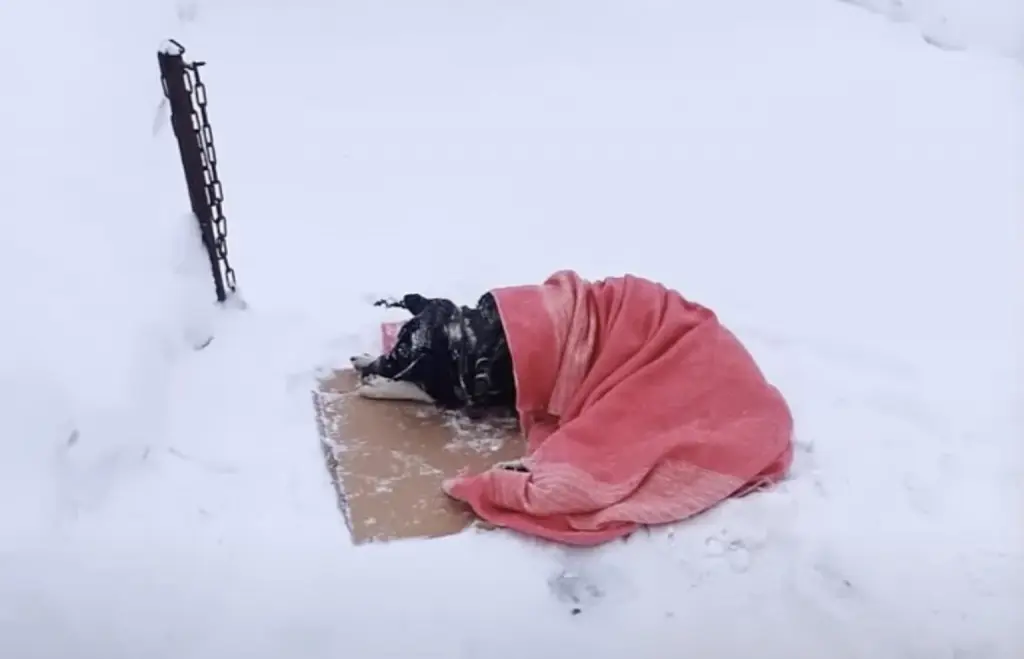
Drawn to the sound, a passerby stepped behind a modest house and discovered a scene that was difficult to bear. There, in the snow, was a dog chained tightly to a wooden post. The short chain offered only the slightest room to move, not nearly enough to avoid the icy ground beneath him. No shelter was provided, no sign of food or water—just desolation amid the harsh weather.
This fragile dog’s name was Jem. His thin frame shivered violently as frost clung to his damp fur. Looking into his eyes revealed no anger or fear, but rather exhaustion and bewilderment—a quiet, heavy waiting that had endured for far too long.
The First Steps Toward Rescue
It quickly became apparent that Jem’s situation was neither accidental nor temporary. No doghouse offered refuge, no blankets softened the cold. The explanation from the homeowner was chilling: Jem was being punished for some perceived wrongdoing. There was no urgency or apology, no sign of concern for his welfare. In that moment, it was clear Jem could not remain where he was. What he required was beyond kindness—it was rescue.
Video: Jem’s Rescue from Frozen Chains to a New Beginning
Rushed to a veterinary clinic, Jem was wrapped in warm blankets as the team worked urgently to raise his dangerously low body temperature. His shivering was intense, revealing the battle his body had waged against the cold. But the crisis extended beyond the frostbite and hypothermia. The veterinary team soon discovered that Jem could not move his hind legs. Further examinations uncovered multiple foreign objects inside his body, including one alarmingly close to his spine, compounded by an existing spinal condition. These factors explained his paralysis and the chronic pain he likely suffered.
Jem’s ordeal had begun long before that freezing morning, and his physical state was fragile. Surgery was considered, yet due to his age and frailty, it posed too great a risk. Instead, the veterinary team pursued a path of long-term pain management and rehabilitation, focusing on comfort and gradual healing rather than aggressive treatment.
He was transferred to a rehabilitation facility—a place where patience and steady care were the foundation. Wrapped once again in blankets during the drive, Jem rested quietly, occasionally lifting his head to absorb a world that was suddenly unfamiliar. His eyes no longer held alarm, only tired watchfulness and a flicker of hope for what might come next.
Small Signs of Healing and Hope
Life at the rehabilitation center was defined by calm routines and gentle support. Each day, Jem received treatments to improve circulation, relieve pain, and support weakening muscles. Progress was subtle—so minute that a casual observer might overlook it—but every small improvement was vital. A slight shift in posture here, a faint twitching paw there, a bit more stability and ease in movement.
Recovery was not solely physical. Volunteers sat quietly near Jem, stroking his coat and speaking softly, offering companionship without expectations. Gradually, the tension in his eyes softened, and a touching moment came when Jem’s tail wagged at the sound of familiar footsteps. After enduring such hardship, Jem was beginning to feel safe—not just surviving but starting to live again.
Building Trust and Finding a Forever Home
Over the weeks, Jem formed a close bond with the person who intervened on his behalf. What started as a rescue blossomed into steady companionship filled with tenderness and trust. Jem’s healing went beyond the physical injuries, touching his heart and spirit as well.
A decision was made that would shape Jem’s future profoundly: he was to remain in this safe and loving environment permanently. His new home was arranged thoughtfully, with soft bedding for comfort, accessible ramps to ease movement, and quiet, restful spaces designed around his needs and dignity.
A young girl in the household gravitated toward Jem, choosing to read quietly beside him and simply be in his company. She saw Jem not as broken but as someone worthy of love and friendship. Such acceptance became a powerful force in his ongoing recovery.
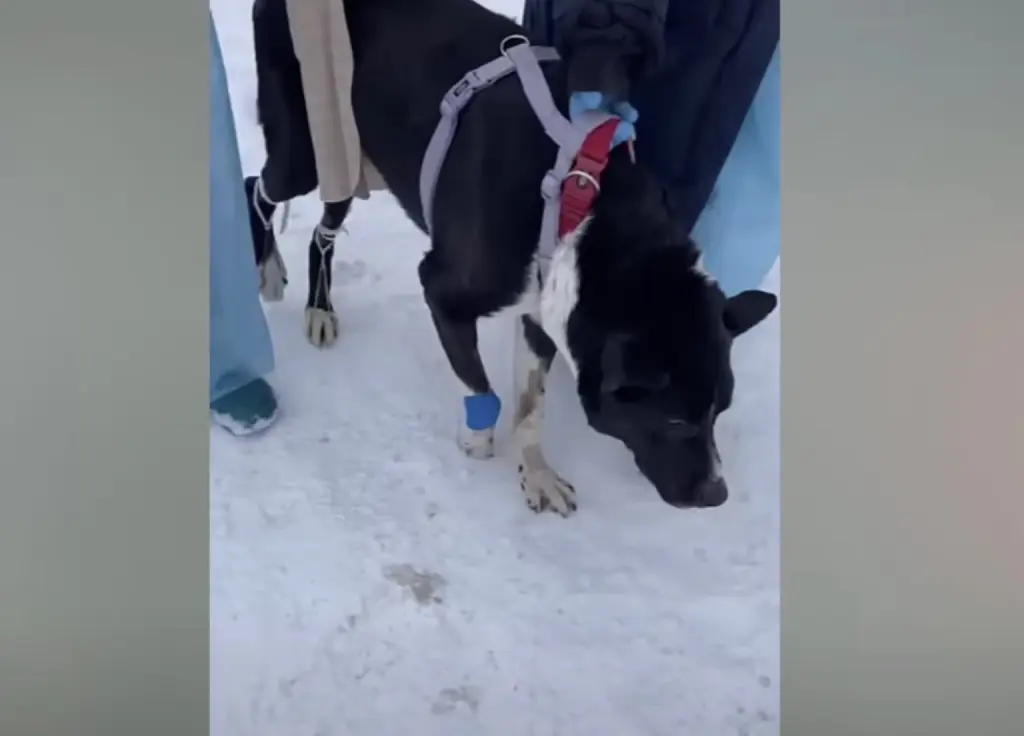
To enhance his mobility, Jem was fitted with a wheelchair, allowing him to explore his surroundings anew. He rolled gently through the yard, paused in warm patches of sunlight, and rediscovered the simple joy of movement. The dog once lost and chained in the snow now moved forward with quiet confidence—not because his past was forgotten, but because it no longer controlled his present.
Life Transformed by Compassion
Today Jem’s days are filled with warmth and safety. He rests comfortably inside, surrounded by gentle routines and the people who love him. His tail wags softly as a greeting, a small but powerful sign of the trust that has replaced his former fear. The isolation that once enveloped him has given way to belonging and care.
Jem’s journey stands as a testament to restored dignity and comfort after cruelty. His story reminds us that a single voice, a single act of attention and kindness, can change everything. Even after life’s coldest, darkest moments, hope and transformation remain possible—and for Jem, a new life has truly begun.