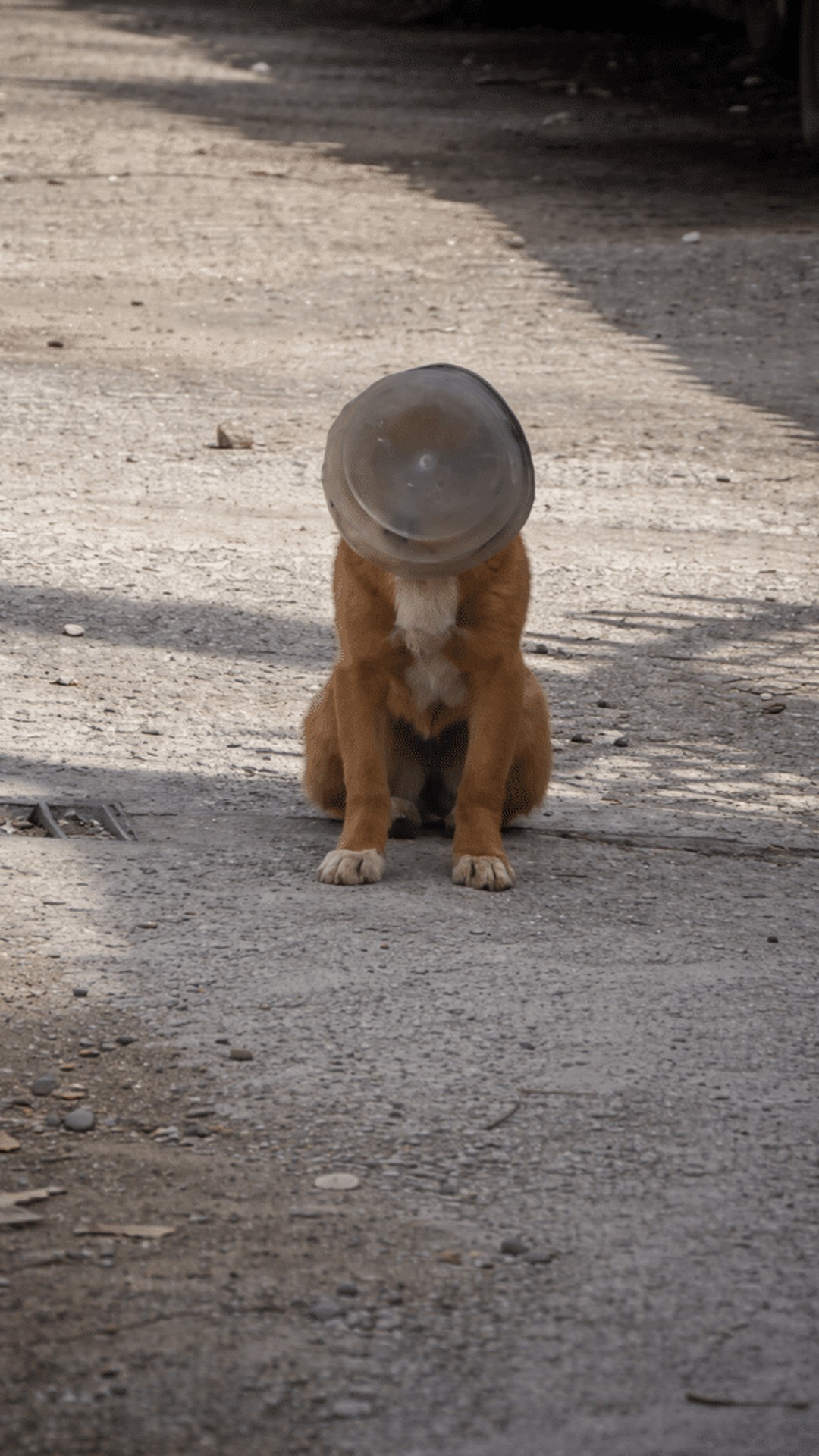
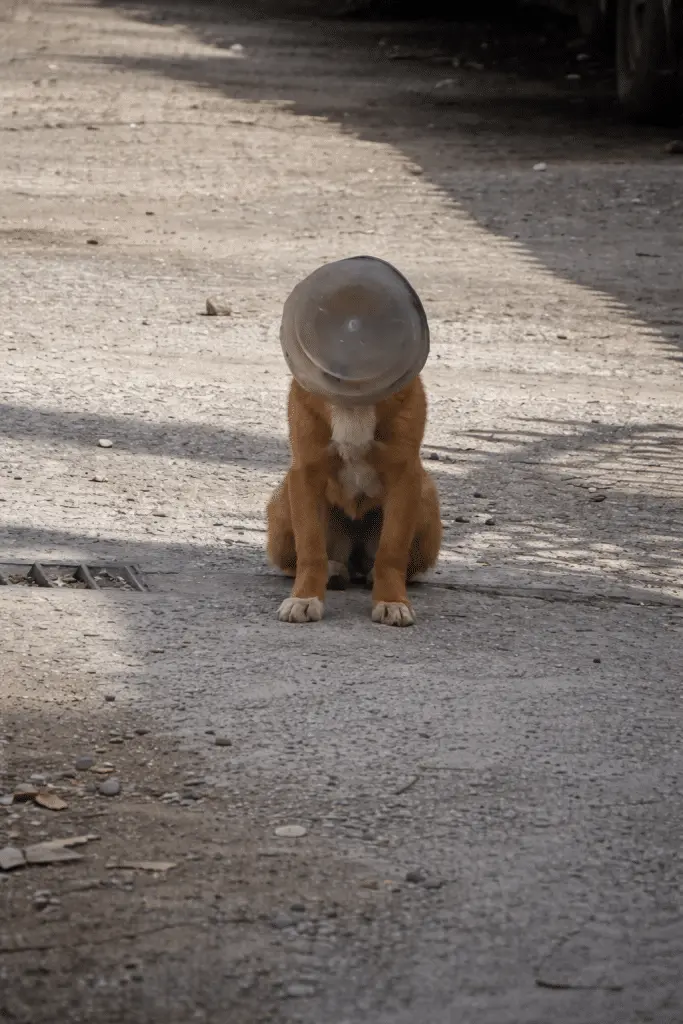
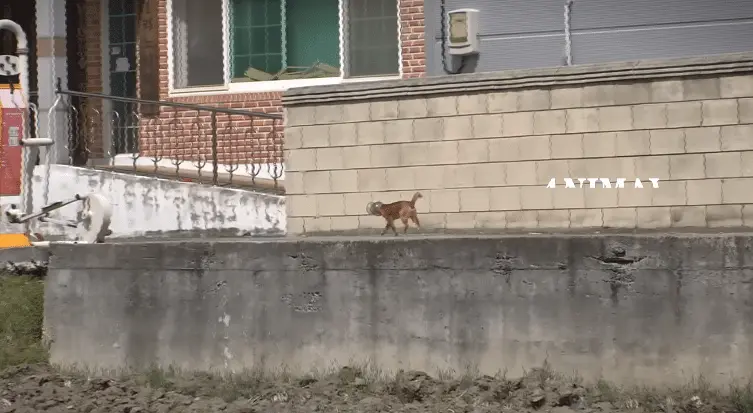
In a serene village nestled in South Korea, residents were drawn to an unsettling sight. Initially, they caught mere glimpses of a stray dog darting between homes, but as days transformed into weeks, a distressing reality unfolded. A rigid plastic container had become lodged over the dog’s head, obstructing his ability to eat, drink, and even breathe comfortably. The impact of this terrifying predicament weighed heavily on the community.
People soon began to notice that this unfortunate canine, later named Daram, had been in this dire situation for almost three weeks. His once robust body had grown frail, and his movements reflected the sheer fear that engulfed his life. By the time the word spread, the panic that had become a constant companion for Daram was evident in his frantic movements.
Despite the villagers’ eager attempts to help, Daram’s conditioned fear caused him to flee at the slightest disturbance. Well-meaning intentions often fell short, as a cycle of panic prevented him from accepting their assistance. It was clear this situation would require more than good will—it needed strategy and expertise.
Video: Stray Dog Rescued from Plastic Jar in Heartwarming Adoption Story
A Community Joined in Concern
As worries deepened, concerned villagers decided to contact the Korean Animal Welfare Association, an organization experienced in the rescue of distressed animals. Understanding that capturing a frightened animal requires a thoughtful and calm approach, the rescuers began their efforts with keen observation. They noted Daram’s habits: where he rested, his movements, and his instinctive avoidance of certain areas. This groundwork was crucial for devising a plan to safely secure the dog.
Strategically, temporary fencing was constructed around Daram’s usual haunts, effectively limiting his escape routes. Despite the relentless rain that made the ground slippery and chilled the air, the rescuers remained undeterred. What followed was a patient waiting game, relying on observation rather than haste. The hours that passed became a testament to the patience required in animal rescue operations.
Ultimately, the rescuers succeeded in guiding Daram into a small wooden enclosure. Their approach was devoid of shouting or frantic chasing—only deliberate movements with an emphasis on tranquility. Once safely contained, Daram was promptly transported to a veterinary clinic, where his healing journey would truly begin.
Crucial Medical Intervention
Upon arrival at the clinic, the veterinarians approached Daram’s precarious situation with compassion and caution. Removing the plastic container that had trapped him demanded precision; any miscalculation could trigger further panic or cause injury. Stabilizing Daram became the priority before the delicate task of removing the container could begin. As the skilled hands of the veterinarians worked methodically, the atmosphere was thick with anticipation.
When the last piece of the container was freed, a hush fell over the room. Daram blinked, momentarily overwhelmed as he reacquainted himself with a world that had been obscured for so long. However, the subsequent veterinary assessment revealed sobering truths: Daram was severely dehydrated, and his kidney values indicated significant impairment from weeks without water. Despite such dire circumstances, his spirit had somehow endured.
A Turning Point in Recovery
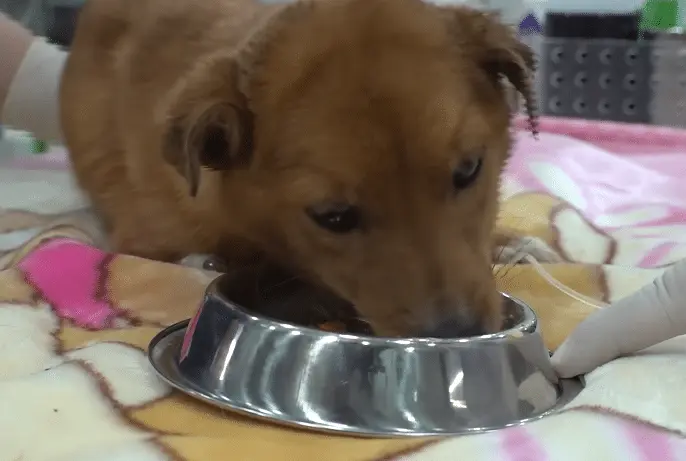
What unfolded next was a fundamental milestone—Daram drank for the first time in weeks. His cautious sips were taken slowly, closely monitored to prevent any shock to his fragile system. For once, he tasted relief from the harrowing ordeal he had endured.
Food was then introduced gradually to avoid overwhelming his weakened body. Each bite represented not only survival but also a significant step toward full recovery. The days of medical stabilization passed, and during this time, IV fluids helped restore his hydration, while nutritional adjustments supported his recuperation. As his body responded positively to treatment, the frantic fear in his eyes began to fade.
Steps Toward a New Life
Among those who had witnessed Daram’s struggle was a local man deeply moved by the sight of this dog trapped by a plastic container. When he learned that Daram required a loving home, he chose to adopt him, offering a promise of a brighter future.
However, the transition from rescue to home life posed its own challenges. Daram initially sought refuge within a crate, often spending hours and sometimes days huddled inside. The safety he had once known became unfamiliar, and the remnants of trauma lingered, clouding his sense of freedom and trust.
Building Trust with Patience
With guidance from an animal behavior specialist, Daram’s new owner adopted a methodical and patient approach to rebuild trust. In the beginning, he placed food a short distance outside the crate, encouraging Daram to venture a little closer without any force or compulsion. The goal was to motivate, not to pressure.
As days progressed, the food bowl was placed gradually farther away. Each small step forward constituted significant progress in restoring Daram’s confidence. In time, he became more comfortable, hesitantly exploring his surroundings, his tail beginning to lift, and his reactions to gentle voices softening.
The crate—once synonymous with fear—began to transform into just another corner within the room, symbolizing Daram’s gradual journey toward reclaiming trust and safety.
A Visible Transformation
Weeks later, Daram’s evolution was profoundly evident. He moved around the house freely, accepted gentle petting, and emerged from the constant vigilance that had previously characterized his behavior. More importantly, he learned to respond to his name, reflecting significant strides away from his fearful past.
In a quiet yet powerful manner, Daram’s story culminated, revealing him safely nestled in the loving embrace of his new owner. This chapter closed without drama or excitement, but rather with a profound sense of peace—showing that sometimes, the journey to healing involves steady progress rather than dramatic changes.
Broader Implications of Daram’s Journey
Daram’s experience serves as a poignant reminder of the lessons inherent in rescue and rehabilitation. Firstly, the hazards posed by discarded plastic waste are critical to acknowledge; what may appear harmless to humans can pose significant risks to wildlife and stray animals searching for sustenance. Proper disposal of all plastic products is vital to minimize dangers posed to vulnerable creatures.
This story also highlights the necessity of coordinated rescue efforts. Attempting to capture frightened animals without the right training can exacerbate the situation, while professional organizations bring essential expertise that safeguards both the animal and the rescuers.
Finally, the tale underscores the importance of patience in the recovery process. Physical healing can occur relatively quickly, but the emotional restoration of traumatized animals is a gradual journey requiring consistent nurturing and understanding. Daram didn’t require force; rather, he needed space, safety, and a person willing to wait to provide the love he so desperately deserved.
Ultimately, the most significant victories often arise from quiet, steady journeys toward healing, illustrating that every step taken in an animal’s recovery is a testament to resilience and the profound power of compassion.


