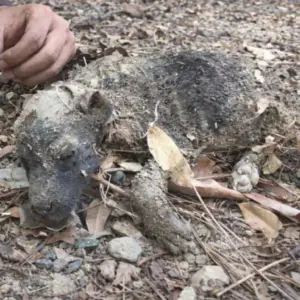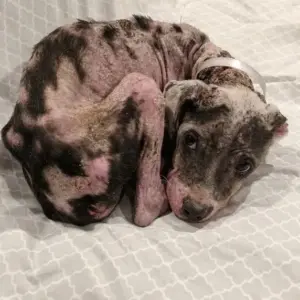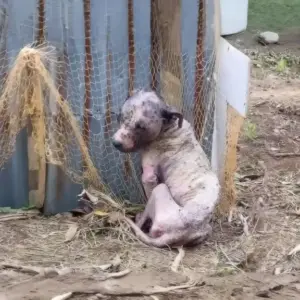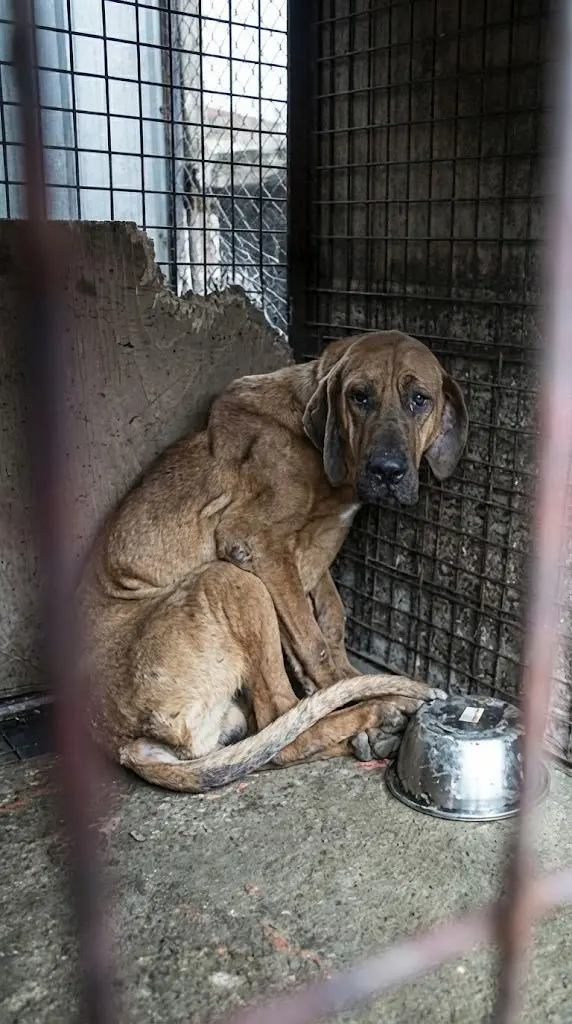
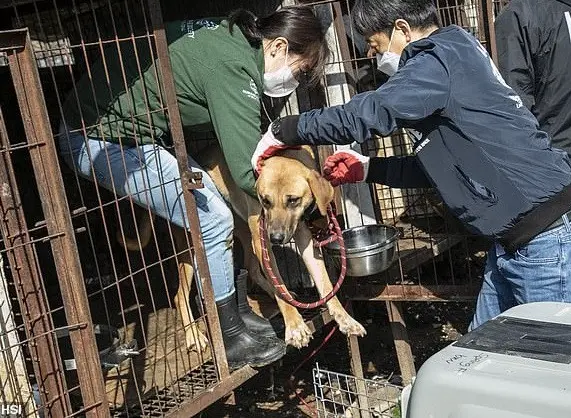
Some dogs survive by fighting. Others survive by disappearing. Robin survived by making himself as quiet and invisible as possible. When rescuers finally reached the dog meat farm in Yongin, South Korea, where Robin had spent years, dozens of other dogs reacted in ways many might expect from frightened animals—some moving, some crying out, others pressing forward in desperation. But Robin remained perfectly still. This stillness did not reflect calm or acceptance of comfort. It was a survival mechanism learned in a world of relentless fear, where being noticed could mean danger.
Inside the farm, Robin’s existence was confined to wire cages, mud, and the permanent stench of suffering. He was not the loudest or strongest dog, nor was he one to seek help. Instead, he had learned to occupy as little space as possible—physically and emotionally. His world had shrunk to silence and invisibility, the only shields he knew.
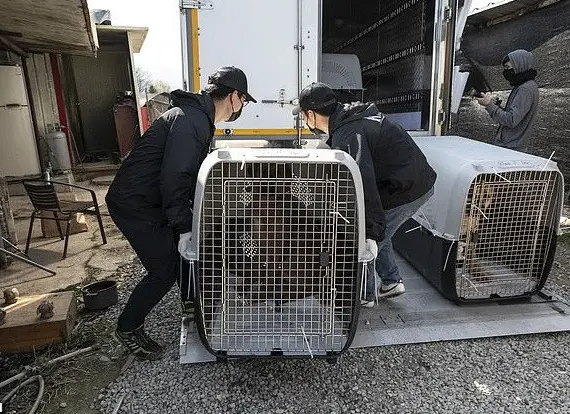
After months of effort, animal welfare investigators were finally able to enter the farm. They found dozens of dogs packed into rusted cages with no comfort or kindness—just suffering and the uncertainty of survival. For Robin, survival was about erasing himself to avoid harm. So when rescue came, it did not feel like a relief. It felt terrifying. Even in the shelter, his fear was overwhelming. If a person got too close, he would stop eating. Movement near him caused panic, and even gentle voices made him flinch. His body was no longer caged, but his mind had yet to grasp that the danger had passed.
While other rescued dogs began exploring their new environment, Robin remained frozen in the habits that had once kept him alive. His caretakers understood this instinct deeply: a soul shaped by fear cannot be rushed into trust.
Video: Robin’s Journey from Fearful Silence to Safety
They did not demand affection or eye contact from him. Nor did they corner him or expect dramatic signs of healing. Instead, they offered something far gentler—space, consistency, and softness without pressure. They placed food near him and retreated. They moved slowly and spoke quietly, never asking him to respond. In their steady presence, Robin was gradually given a single message to hold onto: nothing bad is going to happen now.
The progress was subtle and sometimes nearly imperceptible—a brief glance, a slightly softened posture, a fleeting pause when panic once ruled. To most, these changes might seem insignificant, but for dogs like Robin, healing often begins with such delicate shifts, which can easily be overlooked by anyone not watching carefully. Fortunately, those around Robin paid close attention.
Then a pivotal moment occurred when Robin met Daisy, an older golden retriever who already knew what life beyond fear could feel like. Daisy did not push him or overwhelm him. She simply existed quietly beside him and became a living example of trust and safety. Watching Daisy, Robin saw a dog who accepted human touch and calmly rested nearby without fear. Daisy’s unspoken presence taught him something he had not yet dared believe:
Not every human hand brings pain. Not every close presence is a threat. This slow revelation changed everything. Robin began choosing to stay closer to Daisy, then to follow her lead, eventually mirroring her calm behavior. Trust did not flood in all at once—it grew like a fragile mosaic, built through observation, repetition, and feeling safe alongside someone else navigating the world without fear.
Step by cautious step, Robin began to choose life more visibly. He learned to walk on a leash, hesitant but willing. He learned to take treats from human hands. He learned that resting did not always require constant vigilance or escape. Then came a moment full of deep significance—he barked.
It wasn’t loud or confident, nor was it a dominant call. It was a soft, uncertain sound, but it was entirely his own. For the caring staff who had seen him spend so long trying not to be noticed, that single bark symbolized a profound breakthrough: Robin was no longer surviving only through disappearance. He was beginning to take up space in the world, unashamed and unhidden.
Eventually, Robin was placed in a foster home where patience was understood as vital—not just an option. There, he discovered a gentler rhythm of life: regular meals, safe naps, steady routines, and a favorite sunny spot by the window. Here there were no cages or cold concrete floors, no constant need to vanish.
For the first time, Robin could simply rest. Today, he remains soft and quiet, continuing to heal in ways that may unfold slowly over time. But, importantly, he is no longer invisible.
Robin’s story holds powerful lessons. It shows us that healing and recovery do not always shout their presence through grand gestures. Sometimes recovery is a frightened dog accepting a treat. Sometimes it’s a tail flick or a single tentative bark after years of silence. Healing doesn’t need to be loud to be real.
Robin’s life proves that survival rooted in fear can be transformed when people refuse to look away, when patience and respect are extended without rush, and when time is given to allow trust to grow. In his quietly emerging presence, he offers a poignant reminder of the power of second chances.